Can PVA be injection molded?
Polyvinyl Chloride (PVC) is an industrial thermoplastic used to create a wide variety of plastic goods, including pipes, siding, containers, and more. PVC has excellent strength and durability, making it suitable for many projects. PVC is a high-demand material and ICOMold by Fathom has the knowledge and experience to guide you through your next PVC injection molding project.
What is PVC?
PVC is a popular thermoplastic polymer. Untreated PVC is white and can be brittle until additional plasticizers are added. PVC was first used commercially by the B.F. Goodrich Company during the 1920s. PVC can be manufactured as a rigid polymer or as a flexible plastic. Plasticized PVC will have more flexibility. Examples of flexible PVC include flooring for homes and insulation on electrical wires. Flexible PVC is often used as a replacement for rubber. The rigid form of PVC is most commonly used as a construction material found in pipes for plumbing, vinyl siding on buildings, and machine housings for electronics.
Characteristics of PVC
PVC plastic is budget-friendly material. It is resistant to environmental degradation, chemicals, and alkalis. PVC is a high-density material with great tensile strength and hardness. PVC is also easy to recycle. The material’s durability and manufacturing flexibility is the main reason it has become so widely used. These long-lasting characteristics make it the ideal choice for many industrial applications.
Can PVC be Injection Molded?
Yes. PVC can be liquefied and easily used in the injection molding process. Like other thermoplastics, PVC can be heated into a liquid state, cooled, and then reheated again without degradation. PVC exhibits excellent durability and resistance to chemicals, fire, and abrasion. PVC also has great dimensional stability and is highly impact-resistant. PVC is available in a range of rigidity, making it an excellent material choice for a wide variety of injection molding applications.
PVC Injection Molding Processing Guide
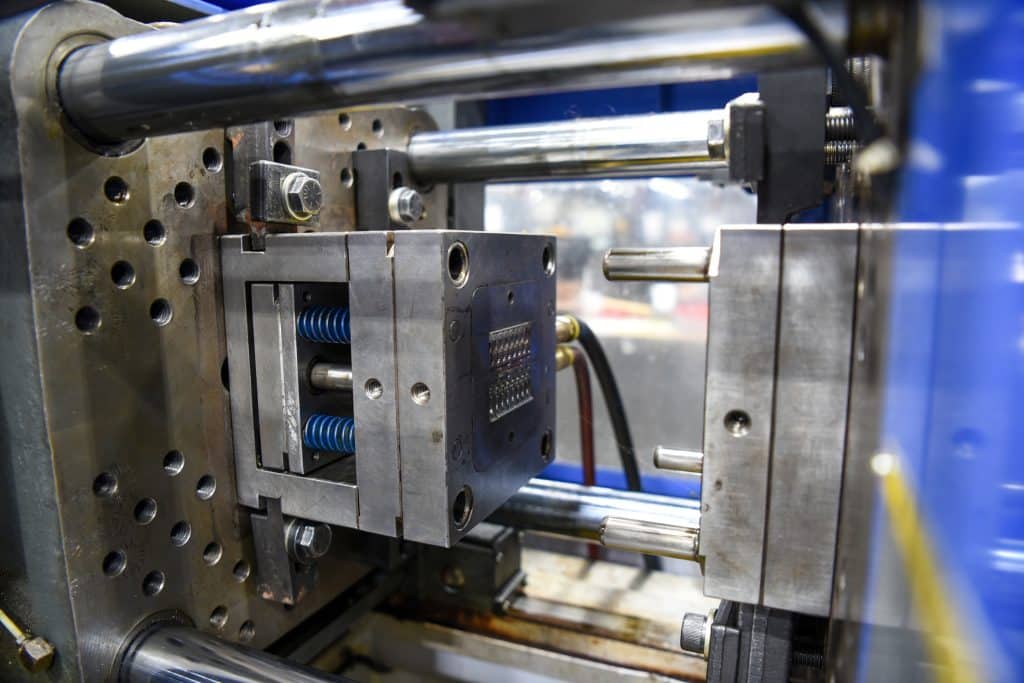
ICOMold’s PVC injection molding processing guide follows the blueprint of most injection molding projects. PVC plastic begins as a pellet or powder. The pellet is then melted into a moldable state. The optimum PVC molding temperature is generally 345°F to 375°F. It is very important to process PVC at the correct melt temperature to avoid severe decomposition problems. The material is injected into the cavity of a two-part mold after the material has reached the melting temperature. The PVC will solidify almost as soon as the mold has been filled. After the material has fully cooled, the two sides of the PVC mold open to eject the part. The part drops into a collection bin and the process starts over. PVC shrinkage is around one to two percent but can vary based on hardness, holding time, melt temperature, mold temperature, and type of additives used. ICOMold by Fathom has decades of combined experience with PVC injection molding and possesses the equipment to ensure a speedy and seamless process.
PVC injection molding offers the benefit of being able to use the PVC mold multiple times, resulting in a high production output rate. This is highly cost-effective and efficient when compared to other manufacturing methods. Injection molding allows customers to manufacture parts with greater detail and the ability to combine multiple assembly steps into one process.
What are the Advantages of Injection Molding PVC?
There are many benefits to injection molding PVC. Some of the top reasons for using PVC include: